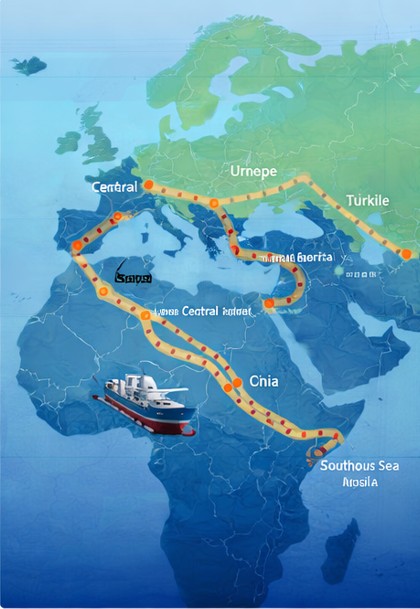
Kazakhstan is increasingly recognized as a pivotal player in the development of the “middle corridor,” a significant trade route that connects China with Europe via Central Asia. This corridor, which is part of the broader Belt and Road Initiative (BRI), is becoming a vital artery for trade and logistics amid changing global dynamics.
Strategic Geographical Position
Kazakhstan's geographical position provides it with a unique advantage. As the largest landlocked country in the world, it serves as a bridge between Europe and Asia, making it essential for the transit of goods along the middle corridor. The country boasts an extensive network of railways and highways that connect it to its neighboring countries, including Russia, China, and several Central Asian nations.
In recent years, Kazakhstan has invested heavily in its transport infrastructure. The government has prioritized the development of key logistics hubs and modernized railway systems. Notable projects include the construction of the Western Europe-Western China International Transit Corridor, which aims to facilitate faster movement of goods across the region. This project, along with other infrastructure developments, positions Kazakhstan as a critical link in global supply chains.
Logistics and Trade Growth
Kazakhstan's role in the middle corridor is further enhanced by its commitment to improving logistics capabilities. The country has established several dry ports and logistics centers that streamline the process of cargo handling and distribution. These facilities are strategically located to facilitate efficient transshipment of goods, reducing transit times and costs.
The growth in trade volume along the middle corridor has been significant. According to recent reports, freight traffic through Kazakhstan has seen a steady increase, driven by rising demand from both Asian and European markets. This trend is expected to continue as more businesses seek alternative routes to mitigate the risks associated with traditional shipping lanes, particularly in light of geopolitical tensions.
Additionally, Kazakhstan has fostered partnerships with various countries and international organizations to enhance its logistics framework. These collaborations have helped improve customs procedures and regulatory environments, further attracting foreign investment into the country. As a result, Kazakhstan is becoming an increasingly appealing destination for businesses looking to capitalize on the opportunities presented by the middle corridor.
Investment Opportunities in Infrastructure
As Kazakhstan solidifies its position in the middle corridor, investment opportunities in infrastructure are on the rise. The Kazakh government has actively sought foreign investment to support its ambitious infrastructure projects. This has led to collaborations with international firms specializing in transportation and logistics.
Recent investments have focused on expanding rail capacities, enhancing road networks, and developing digital logistics solutions. These initiatives are designed to improve the efficiency of trade operations and ensure that Kazakhstan remains competitive within the global marketplace.
Moreover, the potential for further development in the region is substantial. As connectivity improves, more industries are likely to emerge, leading to job creation and economic diversification. This aligns with Kazakhstan’s long-term vision to transform its economy into one that is less reliant on natural resources and more focused on innovation and trade.
In summary, Kazakhstan's emergence as a key link in the middle corridor trade route reflects its strategic importance in the evolving landscape of Eurasian trade. With ongoing investments in infrastructure and logistics, the country is poised to play an increasingly integral role in facilitating trade between Europe and Asia. As the middle corridor continues to develop, Kazakhstan’s contributions to the global supply chain will likely expand, making it an essential player in the future of Eurasian commerce.
Silk Road Economic Belt Map
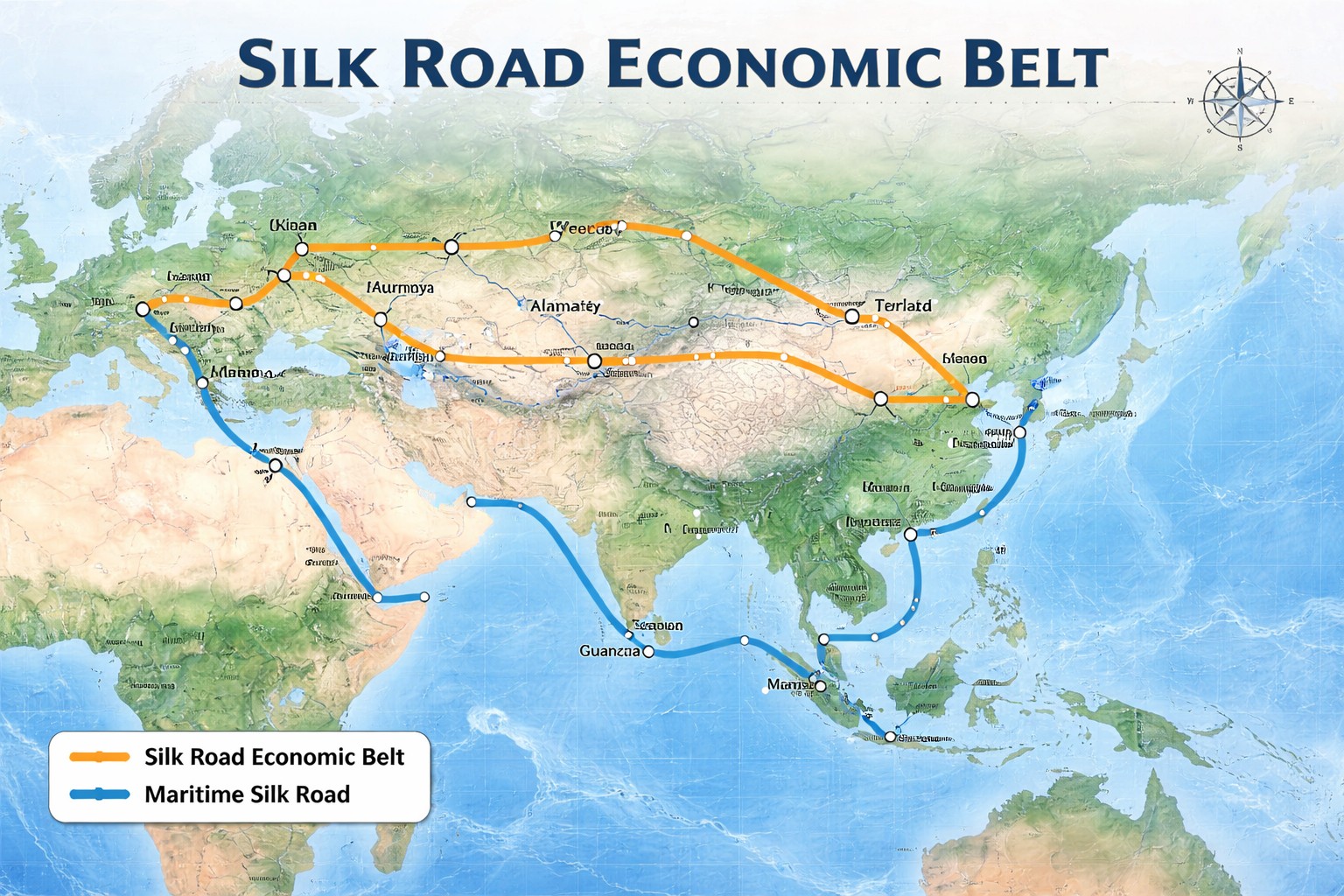
Map overview of Eurasian corridors and trade routes.
Recommended Resources
This page may contain affiliate links. If you buy through these links, we may earn a commission at no extra cost to you.
Logistics & Supply Chain Book
Useful background reading for transport corridors, trade routes, and supply chains.
View ResourceTrade Data Platform
A platform for researching trade flows, customs data, and freight trends.
Open PlatformBusiness Travel Insurance
Optional partner offer for readers traveling across Eurasia for business.
Check Offer